
Table of contents
- 1. Stop trying to problem-solve
- 2. Use the insight that depression comes in waves
- 3. First, stop the drowning. (The lows)
- 4. Then, make your life easier. (The breaks)
- 5. Listen to your body; stop and ask yourself why
- 6. ⭐ Interlude: the meaning of life? Stop thinking about it
- Why doesn't a person kill himself?
- 7. Aim, and aim low enough
- 8. Closing thoughts
- Notes
- Further reading and resources
1. Stop trying to problem-solve.
Yes, in the long term, identifying and mitigating the causes is the right thing to do. But for now, it will not be useful framing because of two nuances:
-
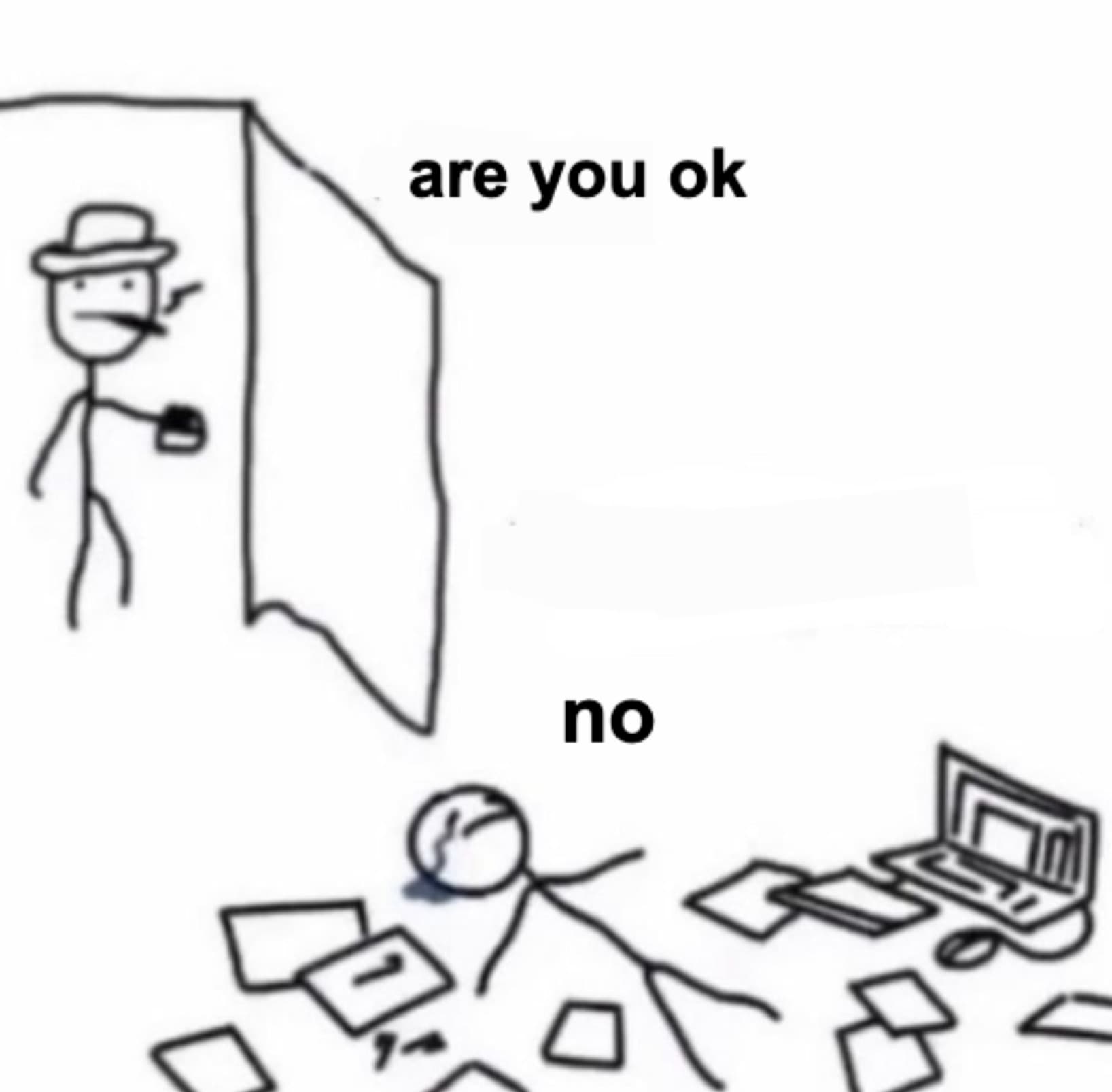
In a depressive crisis, cause and effect are hard to separate and identify.
You want a clear narrative, where cause X led to reaction Y. But depression disrupts this clarity. You might feel terrible because things have gone wrong, or you might make things go wrong because you feel terrible. Most likely (and painfully), it’s both at the same time, in a spiral downwards.
Joshua Wolf Shenk captures this maddening ambiguity by pointing to the old definition of melancholia, “fear and sadness without cause,” and refining it to say "without apparent cause," or "disproportionate to apparent cause."
-
You’re pretty badly handicapped in seeing and executing on solutions.
My friend Samuel tells me, “In depression you cannot see solutions.” You might feel like a little child, lost in a crowd, and helpless. It’s scary, then frustrating, then shameful.
Let's say I hit a low where I don't feel excited about anything [1]. I respond by trying to do or think about hobbies I usually love. With each failed attempt (sometimes I even feel disgust at things I enjoy—"what am I doing, playing with LEGOs?"), I get more desperate. And then you realize that you are not in control, and the helplessness makes you spiral.
Instead, the healthier response is to allow myself to simply feel unexcited and upset without fighting the emotions, which leads me to the following framing.
2. Use the insight that depression comes in waves.
The intensity of how bad you feel fluctuates as waves of horrible lows which are separated by breaks of relative calm or neutral. Recognizing this might’ve been the most helpful thing I did for myself.
In the following two sections, I elaborate on tips and examples for each phase:
- The lows: intense episodes typically involving emotional spiraling.
- Your only goal is to limit the spiraling depth—to stop the drowning.
- I discuss tools to help ground yourself in the present. Concisely: try to recognize your thoughts without judgment, and kindly allow yourself to feel.
- The breaks: moments/days/hours when your mood lifts.
- This is your opportunity to care for yourself proactively. I discuss how to take great care in setting up your environments and habits.
- Through this, you can slowly reduce how bad the lows get.
3. First, stop the drowning. (The lows)
Even if there’s a lot in your life you need to figure out, or your situation is pretty terrible, these are not your job to figure out right now. During the lowest lows, you find yourself in a downward spiral.
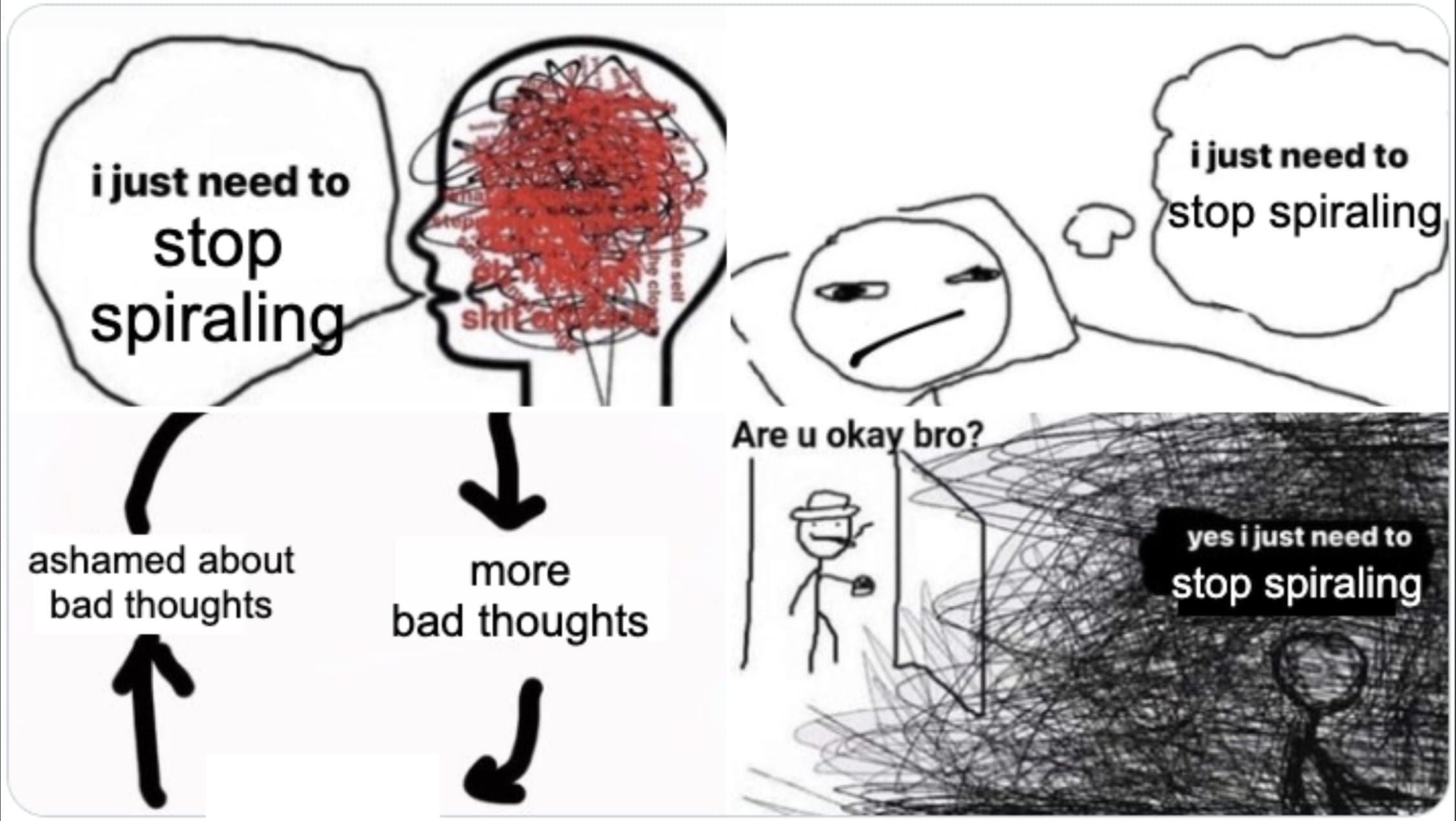
Spiraling occurs when negative thoughts and feelings reinforce each other, intensifying over time [2].
The only thing you need to worry about is to prevent (or limit) the spiraling. The way out isn’t fighting it head-on; it’s to interrupt it gently.
- Ground yourself in the present moment.
- ⭐ 5-4-3-2-1. Name 5 things you can see, 4 things you hear, 3 things you feel (both physical and emotional), 2 things you smell, and 1 thing you can taste.
- Detailed observation: pick an object (e.g., plant, clock) and describe it in as much detail as you can. How does the light bounce off the leaves? Precisely what colors would you draw it with?
- Grab and feel something cold with your fingertips, like ice cubes.
- Tasks that involve categorization or sensory stimulation disrupt the spiraling.
- The above works best for me, but alternatively, you may try any category naming tasks (e.g., all 50 states), paced breathing (4 seconds in, hold, and out), or progressive muscle relaxation (tense and hold each muscle group for 5 seconds before relaxing).
- Acknowledging your thoughts without judgment.
- ⭐ Precisely and honestly articulate what you feel, in a matter-of-fact way.
- “I’m feeling very anxious right now because […] and that’s okay. I’m feeling anger at myself because […] and that’s reasonable.”
- By doing so, your mind is no longer this untouchable monster but rather something very tangible (especially if you physically write it down).
- If it feels too difficult, try articulating a “bad answer” for what you think instead. (It’s better to have a bad answer to a hard question than no answer.) That is, remove the stress of trying to get your articulation perfect.
- Pitfall to watch for: don’t expect negative thoughts/feelings to go away just because you acknowledged them.
- ⭐ Precisely and honestly articulate what you feel, in a matter-of-fact way.
- Detach from those thoughts.
- ⭐ Try not to make identity statements.
- It’s not “who you are”, this is just “how you’re currently feeling.”
- e.g., “I am severely depressed” → “I am dealing with severe depression.”
- It might help to imagine the negative emotion as a black cat living in a corner of your head.
- Or, you can imagine thoughts as clouds floating in your mind (the sky).
- ⭐ Try not to make identity statements.
- Your depression thoughts are garbage thoughts.
- They're bad. Useless. Discard any thoughts that arise during this period and don't over-analyze (See Interlude ).
- Don’t repress or ignore your thoughts, though. Just don’t indulge in them beyond acknowledging them (e.g., beating yourself up).
- I don’t even journal about these thoughts anymore; I found it just further drains my energy.
- Sit patiently through it.
- ⭐ Most emotions, especially strong ones, don’t last very long.
- Avoid thinking for now by distracting yourself with an activity that turns your brain.
- Like a TV show. And if you still feel shitty, that’s fine too.
- They're bad. Useless. Discard any thoughts that arise during this period and don't over-analyze (See Interlude ).
None of these are easy to do, but try to implement just one or two the next low you hit. It was a whole month before 5-4-3-2-1 actually worked for me; I literally celebrated my reversal of a spiral.
The intensity of your lows can get a lot better, but don’t expect them to trend linearly. If you spiral again, you haven’t “reset.”
Towards the end of my time dealing with it all, I would hit lows (especially if I did not sleep enough), which I learned to simply acknowledge that I’m not feeling great, and I was able to sit through them. They looked more like a couple of melancholy, patient hours than intense spiraling. Each low you calmly sit through chips away at depression’s power over you.
4. Then, make your life easier. (The breaks)
The best time to take care of yourself is when you are doing well. Not when you hit rock bottom (although you’ll need to then for survival), but during the breaks, you’re in the best possible position. Even if it’s not great, start with what you can.
4A. Habits
Your habits are your life’s backbone, as they define what “rock bottom” means. They have an outsized impact on your quality of life.
Don’t beat yourself up for not doing these things, but prioritize trying to make the following happen, in this order:
-
⭐ SLEEP IS KING.
- By all means, try to get enough sleep. Lack of sleep exacerbates negative feelings and messes with your body’s chemistry.
- Consistency in sleep and wake time >>> the schedule itself. (i.e., Be nocturnal if you need, but be consistently nocturnal).
-
⭐ Spend time with other humans. See faces.
-
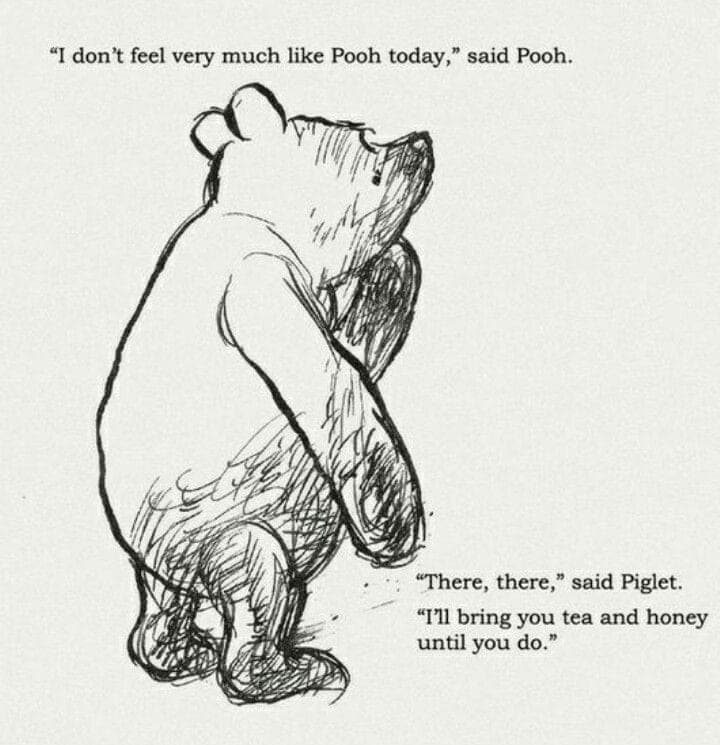
“I don’t want to talk to people.” → make sure you’re picking the people you’re most comfortable with.
-
“I don’t want to talk to anyone.” → find a way to make contact passively, like through activities (e.g., basketball, TV show).
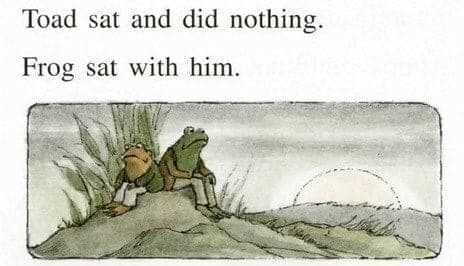 Their presence is enough.
 -
Be a "yes" person. Especially if you make plans (see planning section below ) to see others, urge yourself to follow through.
- ⭐ Behavioral activation: “just do it.” Don’t give into the dullness/deadness (it is far too easy to). Nothing will change if you stay in that dull state; do it anyway.
-
-
Get some movement / physical activity in.
- It helps if you can find an activity that you become addicted to (though it might take some time). For me, it was playing pickup basketball.
- “Energy conservation” (or this notion of having a fixed amount of energy you draw from) is not a real thing: if you picture the average person who goes to the gym every day, they certainly expend more energy than someone who doesn’t, but they usually report having more energy.
- You might feel exhausted already, but you are not “too tired to work out” or “too tired to move your body.”
-
Nature, or the outdoors. It helps open your mind up.
- Go on a walk in your neighborhood, or plan a hike or short trip.
-
Get good nutrition.
- General principle: keep your body happy, and it will help keep your mind happy in return.
- I had a specific vice of eating late-night meals (or binge-eating, for that matter). I stopped doing this by always eating three balanced, full meals during the day.
4B. Environments
There are many tricks for ensuring you stick to your habits [6], but the most effective is setting your environment up correctly.
-
Physical environment
-
Where are you?
-
Get out into a different area/location than you are used to. A new environment can help enormously (c.f. the very first points on both Alexey Guzey’s productivity post and CGP Grey’s “7 Ways to Maximize Misery” ).
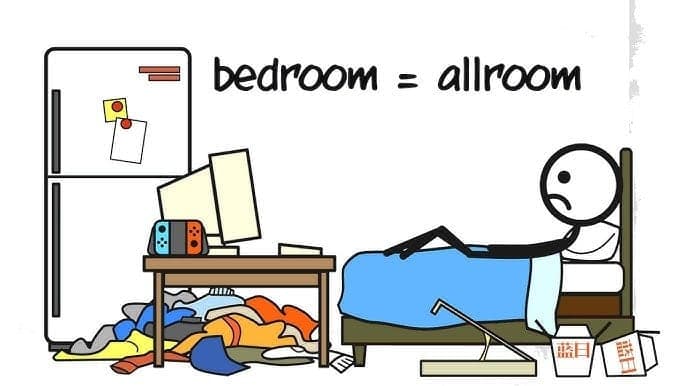 If nothing else, please get out of your bedroom.
 -
“I feel stressed in my room” or “My house is unproductive (right now)” → acknowledge that and get out.
-
-
What do you have in your environment?
- Keeping my phone away from my bed has helped prevent unintentional scrolling and improved my sleep [3].
- If you want to read more, place the book where you will often see it. Encourage activities you know will keep you happier if they require some activation energy.
-
-
Mental environment
-
Plan your day out (even if it’s a poor plan, at least you have a default of where you should be).
-
⭐ Because unstructured time can cause anxiety.
- When I took a day off work to try to recover, I often wouldn't do anything (despite knowing there were things I wanted to do).
- Without intentional planning, you’ll default to the systems you already have in place (whether they be actual habits, like opening Netflix, or thought patterns, like “I’m not being productive enough”), which is dangerous.
-
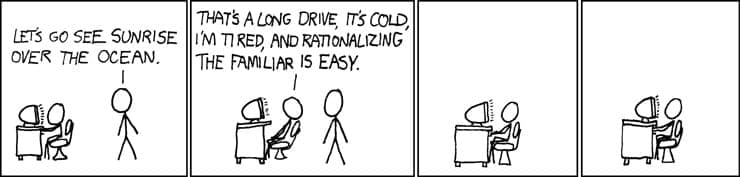
Reduce the friction of activities via planning. [4]
-
Try to schedule things with friends, workout classes for yourself, etc. (It’s hard to feel depressed when you are in the midst of doing things.)
- You still have to be a “yes” person when the time comes to do the activity, but having a default of knowing where you should be instead of meandering is infinitely better.
-
-
Planning shouldn’t be making a prison you “have to follow.” Imagine the day you’d like to have, what would be fulfilling and doable, and let that guide you.
-
-
Making a menu of activities (to decrease decision-making anxiety). [5]
- There are two types of activities: those that keep your brain active (fulfilling) and those that turn your brain off (distracting).
- During depression, you’ll need both. Sometimes distraction is what’s right for you.
- There are two types of activities: those that keep your brain active (fulfilling) and those that turn your brain off (distracting).
-
Journaling everyday can help.
- ⭐ But never try to solve your thoughts during journaling. Try only to be an observer.
-
5. Listen to your body; stop and ask yourself why.
Your body already knows what your mind is going to reason about later.
In that sense, it’s the only ground truth you have. Whatever it wants is a proxy for what you actually feel.
-
You want to go watch YouTube? Listen to your body there, and figure out if that’s actually what you want to do (maybe you wanted to learn something, maybe you wanted to relax).
-
You either arrive at something better to do or at comfort to do that task.
-
On that note, never try to fight your body—it gives you the rawest, true datapoints. Not enjoying work? → well, why? Spend more energy understanding and less energy fighting the feelings.
-
Take procrastination for example:
99% of the time procrastination is not about you being lazy or lacking work-ethic. Your body/brain is sending you some important information about the tasks at hand, and it's important that you listen to those signals empathetically.
- Marco Vega
-
Or phone addiction:
Phone addiction masks unpleasant emotion. When you get that feeling like you need to stare at the phone, ask your body what it wants to do. Does it want to cry, shake, moan, dance, etc? If you let it express emotion, you get some control back.
- Tucker Peck
-
6. ⭐ Interlude: the meaning of life? Stop thinking about it.
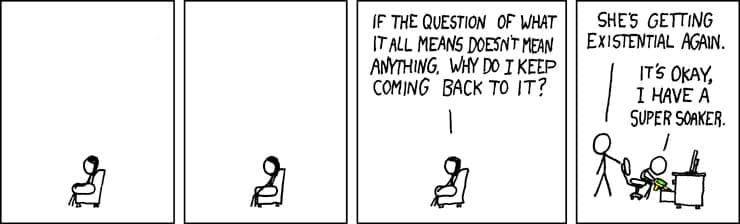 "It's like the squirt bottle we use with the cat."
During this period, you’ll inevitably find yourself thinking very hard about why you’re depressed, or deep questions like what the meaning of life is. This section draws entirely from the advice from my friend and mentor Samuel, which has helped me through my periods of depression and certainly remained valuable beyond them.
-
Firstly, depression is a condition where “you cannot see solutions,” so when you try to solve your depression, you have already lost.
- You may feel helpless and at a loss for what to do—allow yourself to feel that way, and continue applying what I’ve covered in this handbook.
- As stated before, don't indulge in the garbage thoughts (3.4 ).
-
Thinking too much about the meaning of your life or over-analyzing your life can be a symptom of depression.
-
Notice how after good night's sleep, and when you’re having fun with friends, you are not considering the meaning of life—you simply feel it, and you live.
-
The meaning of life is not something you discover through logic. Albert Camus famously opens The Myth of Sisyphus by questioning why one should not commit suicide given life's apparent meaninglessness. Here’s an excerpt I love that indirectly answers Camus’s question, showing that the reasons we keep living, and thus life's meaning, exist entirely outside the realm of logic:
-
Why doesn’t a person kill himself? Is it because of logic? … Or is it rather: my mom will pick up the phone and tell my little brother.
-
Is it logic standing in your way, or a picture? A picture of your mother on the wall. Or: the picture of her face when she speaks to your little brother.
-
Is it logic standing in between you and death, or another person? Or, rather, that tomorrow your friend will visit.
- Samuel Liu, Life Handbook
-
-
Despite lying outside of logic (”the meaning of life is ineffable”), many things can quietly build meaning into your life over time.
Having people who need you, faces that appreciate you, hobbies that you enjoy, all these build up in your bloodstream a certain constant dosage of meaning. When somebody thanks you for your labor, you have a hard time saying life has no meaning. The problem with privilege is that nobody needs you. Somebody needed our parents; when they sent money back home, it was worth much more than the sweat of their labor. Search out situations in which people need you. Then you will never wonder about the meaning of life.
Slowly, a person can build up a habit and schedule that include lots of meaning in life. It is something that builds up in the bloodstream, over time.
- Samuel Liu, “the monkey drawing its own cage”
-
-
And let’s say you do arrive at the realization that life has no meaning, and nothing has a point. But ask yourself: was there any meaning to life before all of this pondering?
I found it difficult not to think about such questions when my mental health was poor. So then this section is all to say: don’t be discouraged from not arriving at satisfying answers.
7. Aim, and aim low enough.
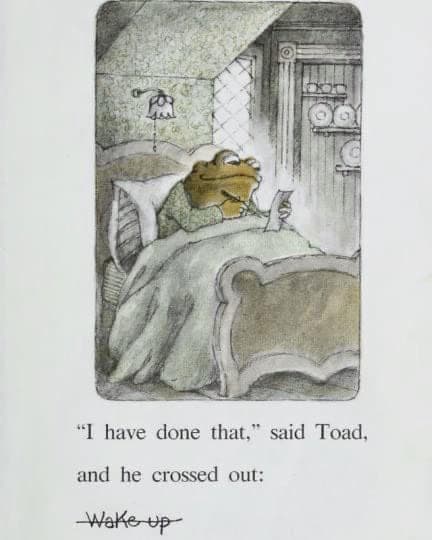
It's going to feel like shit, and you're going to be really bad at getting yourself to do things. But you can slowly improve, if you both (i) take intentional aim, and (ii) aim low enough.
-
What you aim at determines what you see and think about.
- I try to minimize thinking about eliminating the bad things from my life (e.g., obsessing over screen time). When I obsess about cutting a habit out, my mind is fixated on that very thing.
- If you keep thinking “I need to stop watching YouTube” to yourself throughout the day, what are you going to do when you’re tired and have some free time?
- I'd rather have filled my mind with positive goals and not have the space/time to fixate on the negative (similar to how people who enjoy life don't fixate on what the meaning of life is; see Interlude ). Oftentimes, the negative behaviors are the symptom, not the root cause. (Listen to your body ).
- Concretely: try to figure out how to enjoy your life more and identify the activities that bring you fulfillment. As you deal with your depression, shift your focus onto building the positive habits and systems, not against all the negative ones you have.
- Implicit here is the need for you to aim up: throughout your depression, don’t stop trying to make your life better.
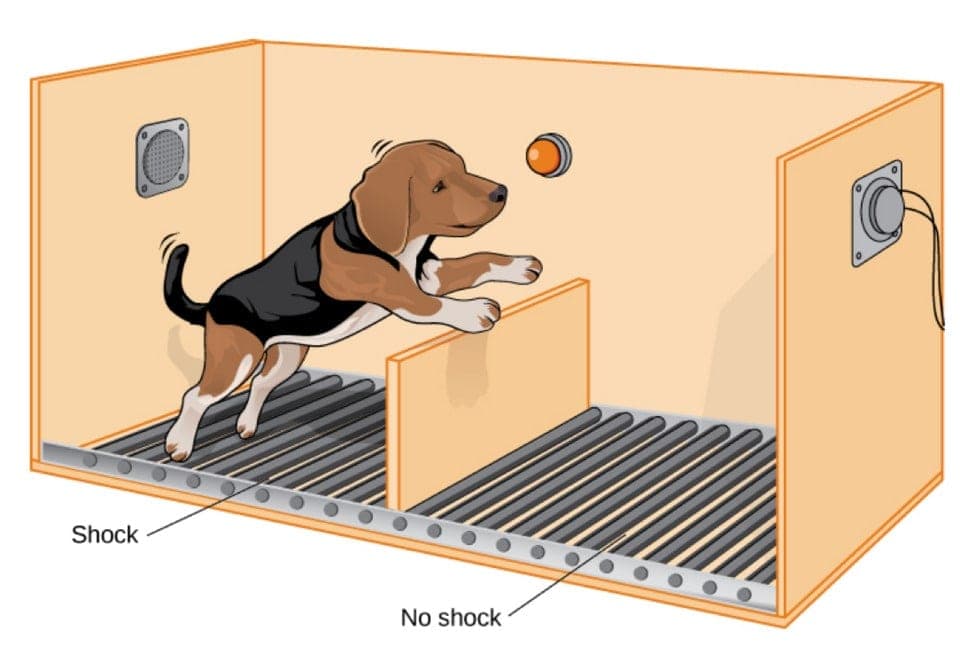
- This might seem like an obvious point, but learned helplessness is a very real phenomenon (where you believe you are powerless, so you give up even when opportunities to improve are available) [7].
- Sometimes I had given up, and when I felt shitty I didn’t even want to stop feeling shitty. That’s a terrible trap to be in. Don't stop aiming.
- I try to minimize thinking about eliminating the bad things from my life (e.g., obsessing over screen time). When I obsess about cutting a habit out, my mind is fixated on that very thing.
-
If you’re not willing to do something, make the task smaller.
-
The example I still remember to this day is roughly this: you have piles of papers on your desk to go through, but you can’t bring yourself to do it. Okay, can you at least go through one paper? No? Okay, can you at least put the one piece of paper in front of you? No? Can you at least sit at the desk, for five minutes? What about one minute?
You have to make the task small enough, so that you’ll do it. No matter how small that is. … I’ve never seen anyone not able to progress if they made the task small enough.
-
Take pride in the smallest wins. All of this only works if you actually take the pride in doing the little thing.
“The definition of humility in some ways is that you start progressing where you can start… …[T]he first task seems so small that you literally have to be on your knees to be humble enough to lower yourself to take that first step, you know, God, is that all I can do? I’m so useless. You might even be more useless than that because you might fail at it.”
-
-
Pitfall: don’t expect this aim → fail → update loop to look pretty.
- I had this noble idea of I’m going to try and fail and it’s going to feel glorious; instead the whole time everything felt so messy and burning. But I kept aiming, and, looking back, I ended up taking many good steps for myself.
8. Closing thoughts.
Be kind to yourself. We often get in our own way in trying to improve, and the principles above only work if we start with compassion with ourselves:
- You stop doomscrolling to meditate before bed not because you force yourself to, but because you want yourself to feel better tomorrow.
- You aim low not just for the principle, but because you are patient with yourself.
- You plan your days by asking yourself, What kind of day would you like to have today?, and you listen.
Lastly, but perhaps most importantly, try to spend time with those who are kind to you. As hard as it may be, those who love you will understand. Ultimately, it was my friends and family—not any handbook or technique—that helped me through these times. Much of this handbook comes from other people’s advice (coaching sessions, essays, long walks) applied to my own life. And even if they don’t always know what to say or do, their presence will be enough.
 It certainly was for me.
Thank you to Tina Mai , Samuel Liu , Vedant Khanna ,  Dhruv Pai , Aatik Chopra , and Millie Wang for reading drafts of this. More importantly, thank you for your patience and support through my depression. ❤️
Thanks for reading! If you enjoyed this, I'd love to add you to my mailing list for new essays:
Notes
Anhedonia:
Me: if i'm depressed and want to do absolutely nothing and nothing excites me what should i do
ChatGPT: … If your brain is hitting the shutdown everything switch and nothing feels worth doing, that's not laziness or weakness—it's a real symptom of depression, called anhedonia. It's when your reward system basically goes offline. …
I learned what this word meant from ChatGPT (of all places) and for some reason was surprised there was actually a word for it. I also decided that this was one of the worst feelings out there, because it was not only shitty in itself but also very, very scary.
I figured it's worth me sharing this definition here as well; and as I have written above, the only way I've ever successfully dealt with it is to allow myself to feel it.
Sidenote: talk to ChatGPT! It has surprisingly yet consistently been an incredibly helpful tool for me, because it can act as a therapist on demand. You can rant your current situation (perhaps you are in a spiral), and it will guide you empathetically.
Anhedonia:
Me: if i'm depressed and want to do absolutely nothing and nothing excites me what should i do
ChatGPT: … If your brain is hitting the shutdown everything switch and nothing feels worth doing, that's not laziness or weakness—it's a real symptom of depression, called anhedonia. It's when your reward system basically goes offline. …
I learned what this word meant from ChatGPT (of all places) and for some reason was surprised there was actually a word for it. I also decided that this was one of the worst feelings out there, because it was not only shitty in itself but also very, very scary.
I figured it's worth me sharing this definition here as well; and as I have written above, the only way I've ever successfully dealt with it is to allow myself to feel it.
Sidenote: talk to ChatGPT! It has surprisingly yet consistently been an incredibly helpful tool for me, because it can act as a therapist on demand. You can rant your current situation (perhaps you are in a spiral), and it will guide you empathetically.
We see spiraling in many familiar forms:
- Worrying before a performance and then worrying about the fact you're worrying.
- After doomscrolling for hours, you know you're stuck and you're ashamed that you're stuck. Your brain punches itself ("I'm a mess", "How did I let myself do that", "I can't even stop myself from scrolling") and emotions compound.
We see spiraling in many familiar forms:
- Worrying before a performance and then worrying about the fact you're worrying.
- After doomscrolling for hours, you know you're stuck and you're ashamed that you're stuck. Your brain punches itself ("I'm a mess", "How did I let myself do that", "I can't even stop myself from scrolling") and emotions compound.
Limiting screen time has never not helped.

-
Don't be afraid to be bored! Go on a walk, lay in bed and stare at the ceiling.
-
It's hard, but I think it's worth physically leaving your phone out of the bathroom and bed.
Limiting screen time has never not helped.
-
Don't be afraid to be bored! Go on a walk, lay in bed and stare at the ceiling.
-
It's hard, but I think it's worth physically leaving your phone out of the bathroom and bed.
Case study of lowering friction: reading.
- I enjoy reading, but the friction to start means I can too easily end up doomscrolling instead.
- To decrease friction, I can: start reading the first few pages right now (so I don't have to start something new), make a diverse reading list/menu (so I can pick what I want to read), download a book into my Books app (so I can scroll that on my phone).
Case study of lowering friction: reading.
- I enjoy reading, but the friction to start means I can too easily end up doomscrolling instead.
- To decrease friction, I can: start reading the first few pages right now (so I don't have to start something new), make a diverse reading list/menu (so I can pick what I want to read), download a book into my Books app (so I can scroll that on my phone).
Here was my activity menu.
- Fulfilling
- Spending time with people I love (date night with Tina, visit grandparents, gym with friends)
- Reading good writing: many books and essays at your disposal
- Journaling thoughts (especially after going on a walk)
- Dump thoughts for writing (e.g., a mental health log)
- Playing basketball
- Drawing
- Distracting myself
- Building LEGO set
- Watching YouTube LEGO reviews
- Watching cop cam (Midwest Safety) YouTube videos
Here was my activity menu.
- Fulfilling
- Spending time with people I love (date night with Tina, visit grandparents, gym with friends)
- Reading good writing: many books and essays at your disposal
- Journaling thoughts (especially after going on a walk)
- Dump thoughts for writing (e.g., a mental health log)
- Playing basketball
- Drawing
- Distracting myself
- Building LEGO set
- Watching YouTube LEGO reviews
- Watching cop cam (Midwest Safety) YouTube videos
I recommend Atomic Habits . People have already written about habits far more + better than I can, but here are two brief points that have helped me the most:
-
Start with your identity (why) → systems (how) → and goals (what), not the other way around. Instead of saying I want to lose 15 pounds (what) by going to the gym every other day (how), start with the why: I want to be a healthy person who prioritizes health → I will do this by going to the gym. Starting with why is powerful.
-
Skipping one day is okay, try not to skip twice in a row. This way when life inevitably gets in the way you don't lose all momentum (and you don't focus too much on your streak).
-
For most mortals, your real enemy is the number of days when you get nothing written. Getting "not enough" done each day is a lesser problem.
- Tyler Cowen
I recommend Atomic Habits . People have already written about habits far more + better than I can, but here are two brief points that have helped me the most:
-
Start with your identity (why) → systems (how) → and goals (what), not the other way around. Instead of saying I want to lose 15 pounds (what) by going to the gym every other day (how), start with the why: I want to be a healthy person who prioritizes health → I will do this by going to the gym. Starting with why is powerful.
-
Skipping one day is okay, try not to skip twice in a row. This way when life inevitably gets in the way you don't lose all momentum (and you don't focus too much on your streak).
-
For most mortals, your real enemy is the number of days when you get nothing written. Getting "not enough" done each day is a lesser problem.
- Tyler Cowen
One of my friends asked me what I was doing to make myself feel better, and I said that there were times I didn't even want to try. He found this really weird (if feeling bad → why not want to feel better?). Later, Samuel hypothesized that it because of my previous failed attempts of trying to fight my negative emotions. (Again, don't fight your emotions).
-
The learned helplessness experiment: Dogs were split into three groups for an experiment: Group 1 was simply placed in a harness, Group 2 received shocks they could stop by pressing a lever, and Group 3 received identical shocks but had no control (the shocks only ended when their paired dog in Group 2 acted). Later, all dogs were placed in a box where they could escape shocks by jumping over a barrier. Only Group 3, who had learned their actions made no difference, didn't even try. They simply lay down and endured the shocks. (Wikipedia )
One of my friends asked me what I was doing to make myself feel better, and I said that there were times I didn't even want to try. He found this really weird (if feeling bad → why not want to feel better?). Later, Samuel hypothesized that it because of my previous failed attempts of trying to fight my negative emotions. (Again, don't fight your emotions).
-
The learned helplessness experiment: Dogs were split into three groups for an experiment: Group 1 was simply placed in a harness, Group 2 received shocks they could stop by pressing a lever, and Group 3 received identical shocks but had no control (the shocks only ended when their paired dog in Group 2 acted). Later, all dogs were placed in a box where they could escape shocks by jumping over a barrier. Only Group 3, who had learned their actions made no difference, didn't even try. They simply lay down and endured the shocks. (Wikipedia )
Further reading and resources
- Take Aim, Even Badly is one of the most important videos I’ve ever watched (7 minutes).
- CGP Grey’s 7 Ways to Maximize Misery 😞 is a fun short watch :)
- This tweet about self-sabotage!
- Meditations for Mortals is a really, really good book for anyone who is thinking about "getting their life together." I generally don't enjoy reading self-help books but I highly recommend trying this one.
- Here are my running notes
- Aatik’s coaching . I could not recommend Aatik highly enough. I wanted someone to help me build sustainable frameworks—to build myself up—without sacrificing any ambition, and he’s been more than perfect. I've never left a conversation with him without learning something new about myself (+ feeling excited!).
- Zocdoc for finding a therapist. I highly recommend talking to a therapist—their purpose is not to solve your problems but rather provide an insightful window into yourself.
- I’ve been told that therapists are like chairs: just because one is uncomfortable/bad doesn’t mean all chairs are bad.
- On Suicide . I enjoyed this read and many of the comments, too.
- It took a couple of weeks after finishing the book to notice it in my own life: it’s hard to feel depressed when I’m constantly in motion (e.g., filling my days with seeing friends and activities).
- It took a couple of weeks after finishing the book to notice it in my own life: it’s hard to feel depressed when I’m constantly in motion (e.g., filling my days with seeing friends and activities).
- Headspace meditation app has been quite helpful for me. Meditating can be very difficult, but having a service (and Andy’s voice) to guide you can help a ton. You don’t need to pay for it to use it, although I think it’s worth it.
- I meditate either (1) in the middle of the day as a way to center or reset myself or, more commonly, (2) right before bed. It actually really helps me calm down to fall asleep faster.
- Their Sleepcast is really nice too for napping. (Never tried it at night because I keep my phone far away from bed when sleeping).
- My own notes from therapy .
- Atomic Habits (here’s a summary ). Additional comments in the notes above.