
i.
Every reinvention story is a confession, and mine is this: before I started at Stanford this September, when I had often thought I would never return, I was very dismissive of what college had to offer.
I had two gap years in my pockets: living in Rome with other founders; crying after firing someone for the first time; traveling the world, hiking in Uzbekistan, meeting my cofounder's family in Abu Dhabi; sneaking into Stanford dining halls. While I never admitted it, my mindset reeked of how proudly I had weaponized myself. My plan was to do one quarter at Stanford, learn the math that was bottlenecking me, methodically explore, then find a “rocketship” to leave for.
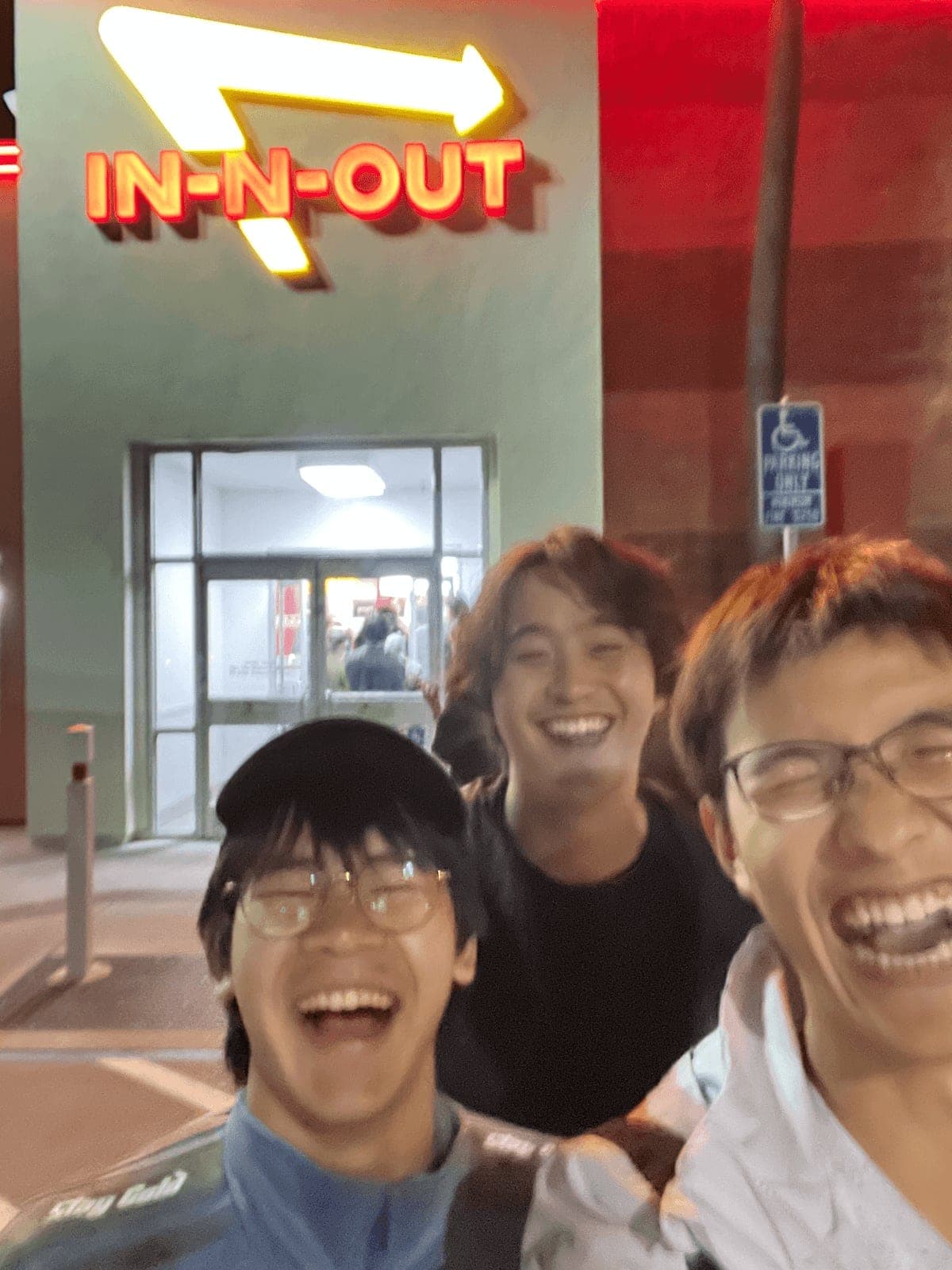
I finished my first quarter last week. It rushes past the same way: biking through campus feeling like a kid, laughing with new friends harder than I have in my life. I have found a magical place that makes it foolish to have ever considered not coming, and magical people here who make the thought of leaving even more foolish. I have discovered that what I’d really craved was the sacred, fleeting permission to be perfectly, aimlessly alive.
ii.
Most of how I’ve changed in the last few months came internally, entirely through reflection—which, in theory, I could do anywhere. But Stanford gave me three important things:
-
Abundance of time and space.
It is one thing to journal every day and complete weekly reviews; it is entirely another, as I have learned, to give yourself the space and time to let your experiences and thoughts seep into your being.
I think being at school gave me “permission” to sit directionless: a) being a student, I’m expected to explore and enjoy this chapter of our lives, b) I recognized early on that this really was a special chapter of my life to cherish (especially when contrasted with 80 hour work weeks).
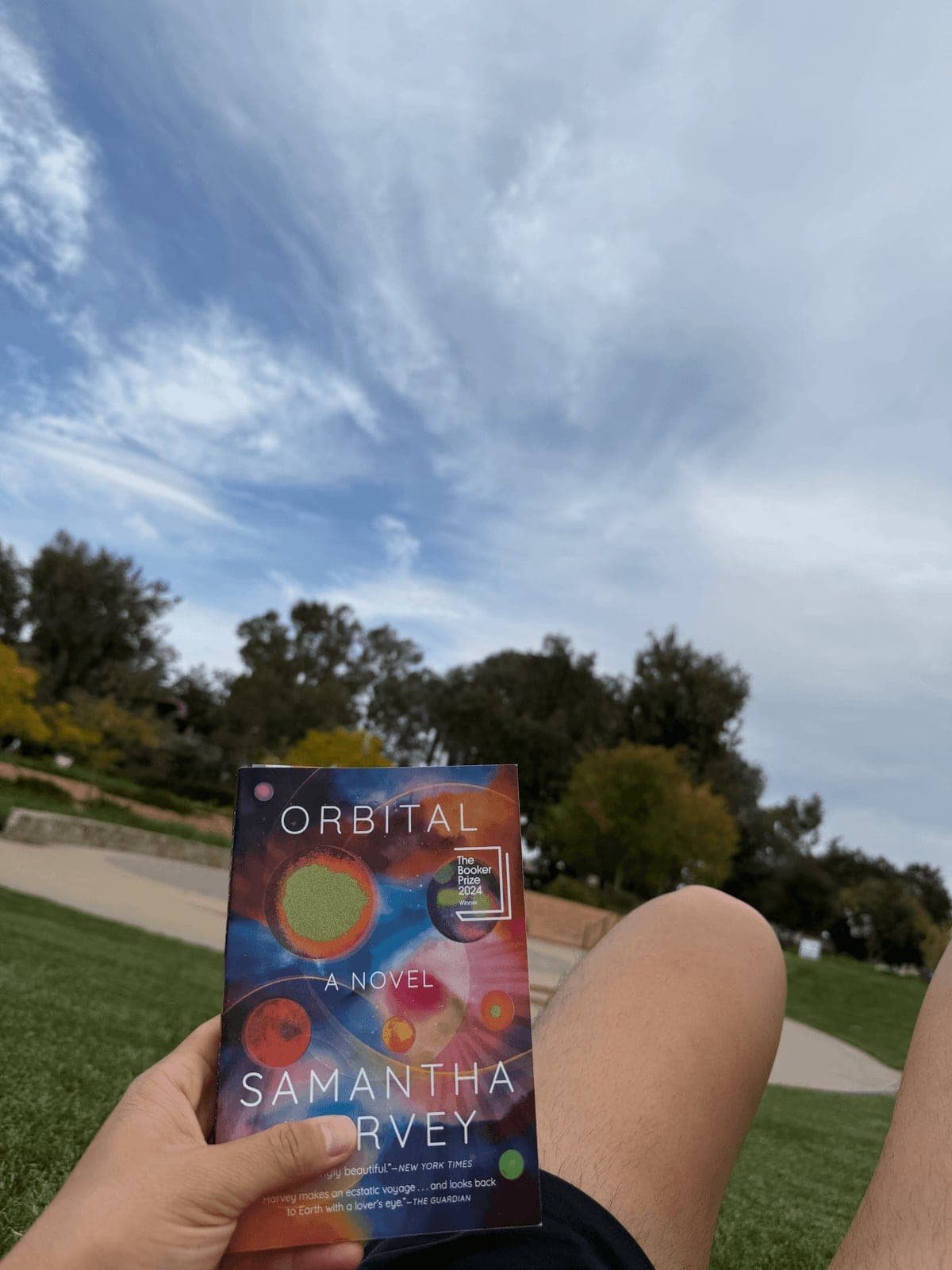
Some afternoons I’d simply lay down on the Meyer lawn and read, or look out the Green library window and people-watch in the silence, or lay back in my seat at the dining hall watching all of us sitting together, eating our ice cream, speaking of our homework and our families and our dreams. I got the time to think on my bike rides about my life and the years in my life, past and future. Biking through campus, I felt like a kid, and I thought of playing basketball during 5th grade recess and of my grandma teaching me how to catch. I looked back on my life in a way I had not done so in so long. That false burning urgency is gone: later today you will study with Alex and play some basketball.
Ideally I should never wait for permission to do so, but nevertheless it is what school gave me.
-
Serendipity as a catalyst.
Of course it is not the first time I have had such freedom; even at the end of summer this year, I had a lot of empty time on my hands.
The difference is that, here at school, there is so much luck everywhere. If change makes you think, then serendipity—filling each day with surprise, with ideas and interactions you could not plan for—keeps you constantly thinking.
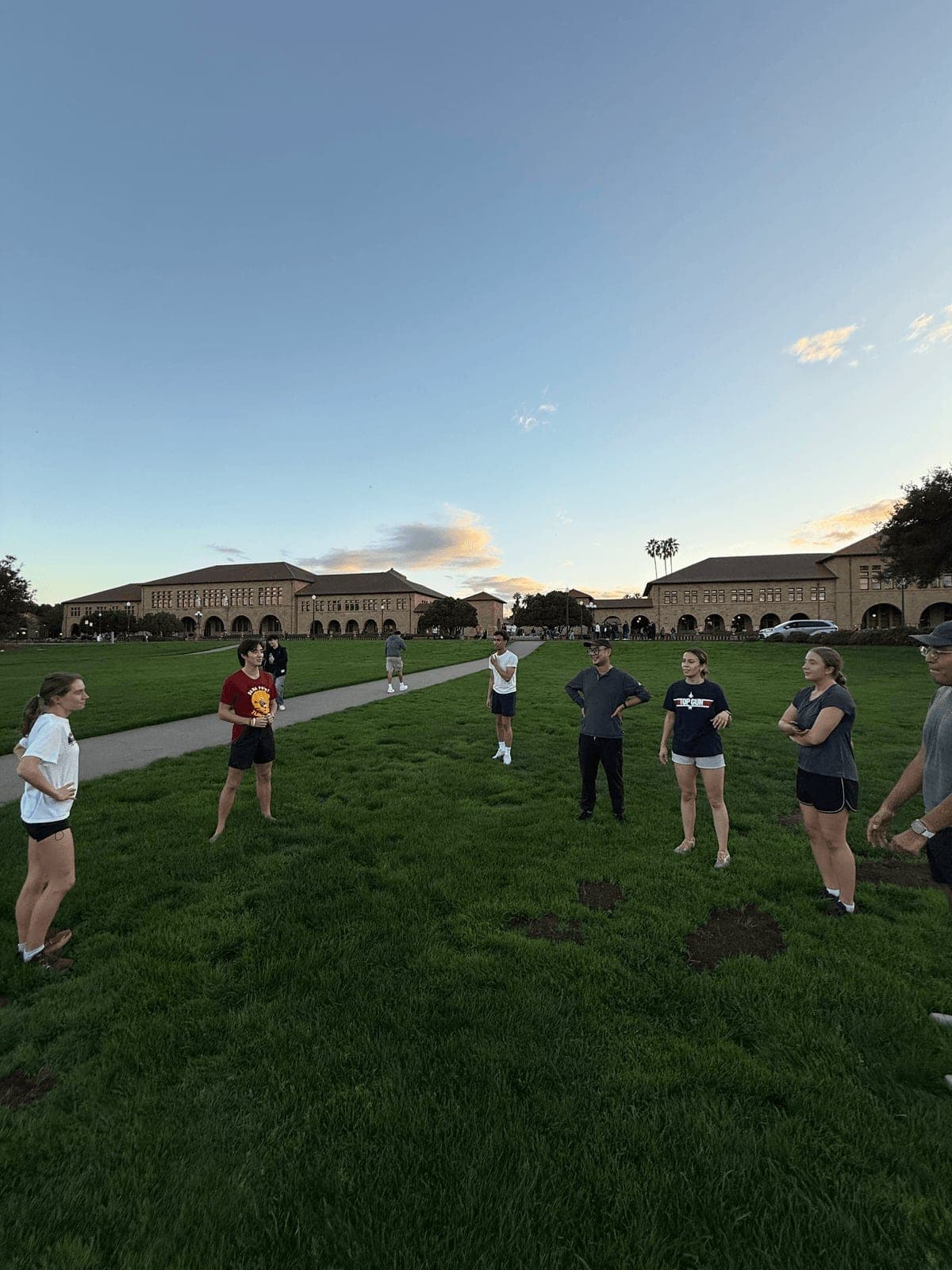
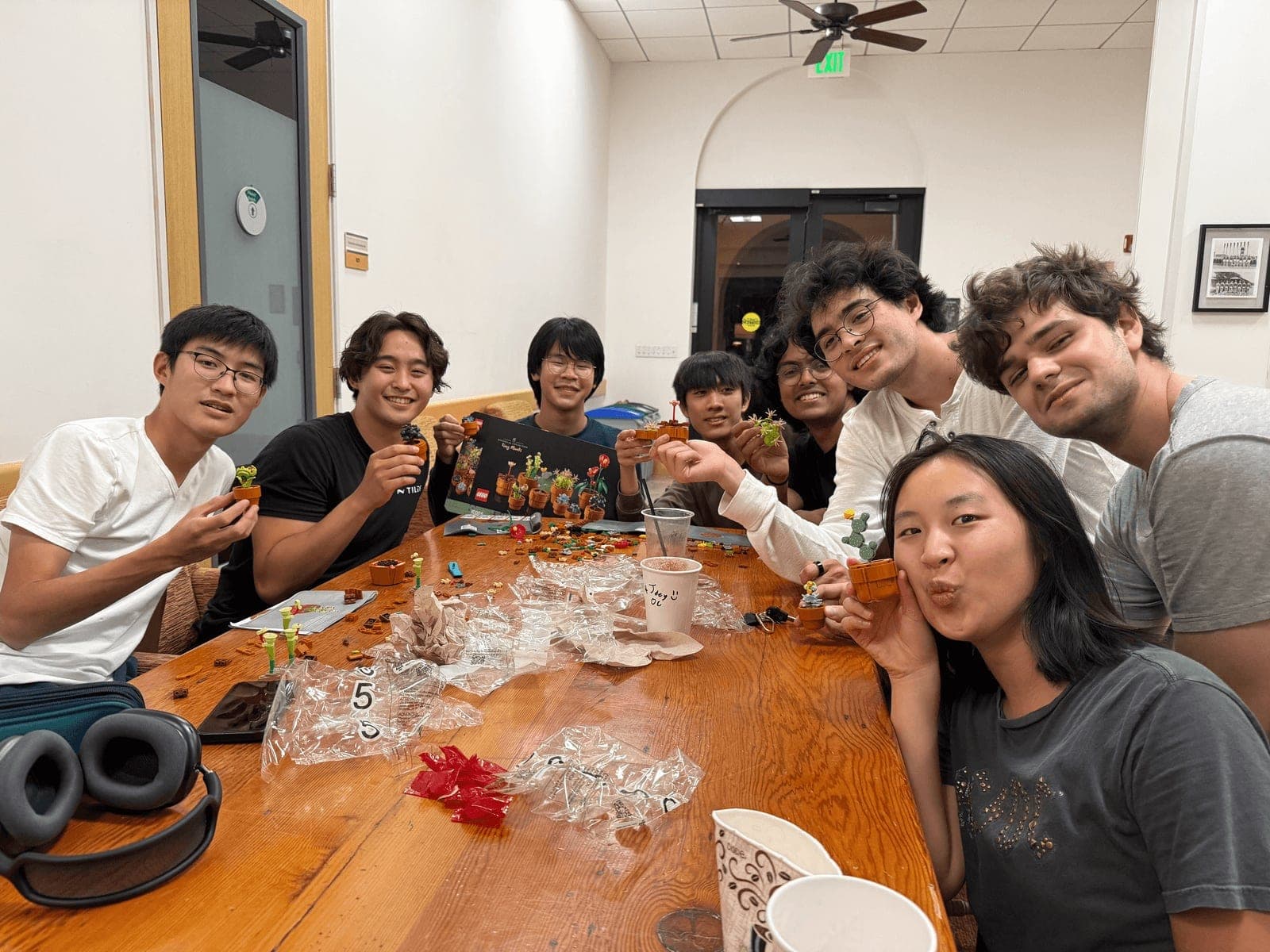
What were the chances I met one of my best friends in a hallway on the way to office hours for a class I was only enrolled in for four days? Or that a casual night of building LEGO flowers with Agniv and Danny would spiral into one of my happiest memories, friends and friends-of-friends joining spontaneously? Or playing tag with Ellen and strangers at the front of campus as the sun set? That was not on my bingo card. There is a beautiful marriage between openness and proximity, between this willingness to say “fuck it, yes” and this dense concentration of wonderful people.
I could not turn my brain off amidst the chaos and excitement.
-
Contrast.
In many ways, I am an imposter here, in part because I have lived a life that feels out of order. These dining halls we now treat as a home base, where we sync back up between classes, were places I once snuck into during my gap years, hoping to feel less alone. They are also where, earlier this year, I naïvely believed that anything college had to offer, I could learn better elsewhere.
I find myself giving advice to other students, even though this is technically my first quarter here and we’re all figuring our lives out together. I listen to people talk and I carry this strange weight of having already lived through some of those dreams.
Aidan once asked me how I thought about “the hero returns, changed,” when the hero is really returning to a home he never knew. Like an imposter, is my answer. In that dissonance, I begin to understand parts of myself, some for the very first time. You learn that your ideas often feel unoriginal only because they are familiar to you.
And it is liberating to be an imposter. Here I stand with the freshmen at their welcome, knowing I am technically a sophomore on paper, surrounded by my admission class of juniors. When someone asked me which academic class I identified most with, the entire question felt so… foreign. In this lucky, beautiful way I get to move through this magical land like a traveler with no allegiances and no pressures to conform.
iii.
Internal changes are usually hard to identify because you play both observer and subject. But this time I can see them clearly:
-
A re-orientation of what matters in my life.
There is the popular statistic that by 18 years old, you’ve already spent about 90% of the time you’ll ever spend with your parents. I felt a version of this quite strongly at Stanford, with my friends. If I were to leave at the end of the quarter, that would be hardly any time with Alex and Gino. I only just met them, and you’re telling me our fun will be up in a few weeks? Then I thought the solution was as simple as staying longer. But even all four years, if you think about it, is hardly enough time either. This kind of revelation reverberates through the rest of your life. For the first time, the thought that I may only get a lifetime with my girlfriend Tina scared me.
Over the past few months, I realized (or maybe more accurately, decided) explicitly that all we have in this world are each other, and that what matters most is the people I love. As much as I still care about finding my life’s work, I cannot help but feel it pales next to the people in my life.
Every week I send an email update, attaching photos from the week and thoughts on how I’m doing, to a list of close friends and family. I spend a couple hours each Sunday writing "mason's weekly no. {n}" with a quiet giddiness, thinking of speaking to the people in my life I care about most, especially those across the country or the world. When this tradition started, it was a way for me to stay accountable for weekly goals. Now, more than anything, I want to keep a thread, literal and metaphorical, between all of us alive. On Thanksgiving day, my friends replied-all with photos from their holidays. It brought me an unreasonable amount of joy.
So when it’s 2 am and Alex is teaching me math, I stay, I cherish it. I send friends drafts of my writing as an excuse to stay in touch and say here’s what’s on my mind, to say you’re on my mind. I am lucky enough to have spent most days this quarter laughing until my stomach hurt, and that, I have decided, is the best measure of my life.
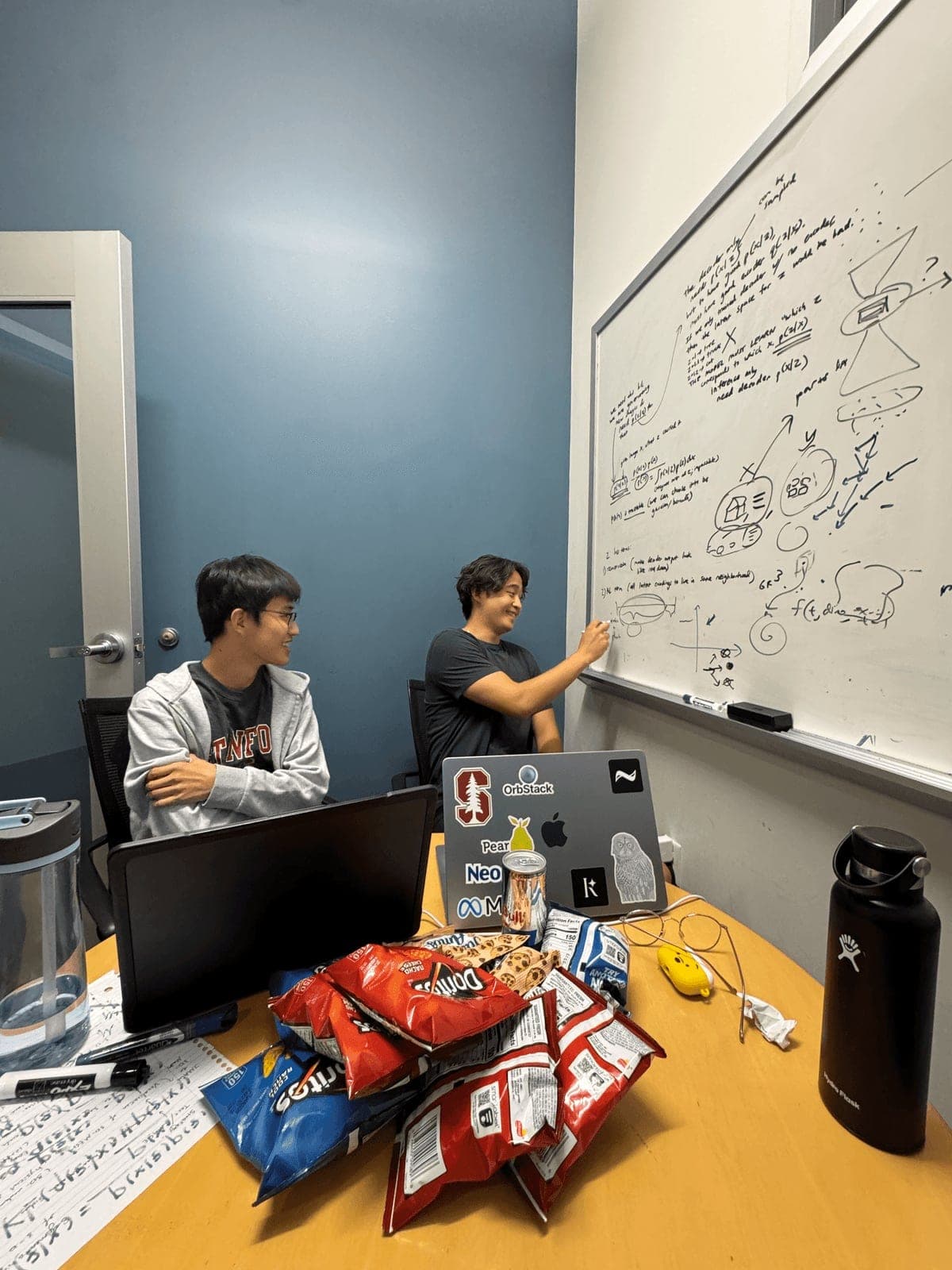
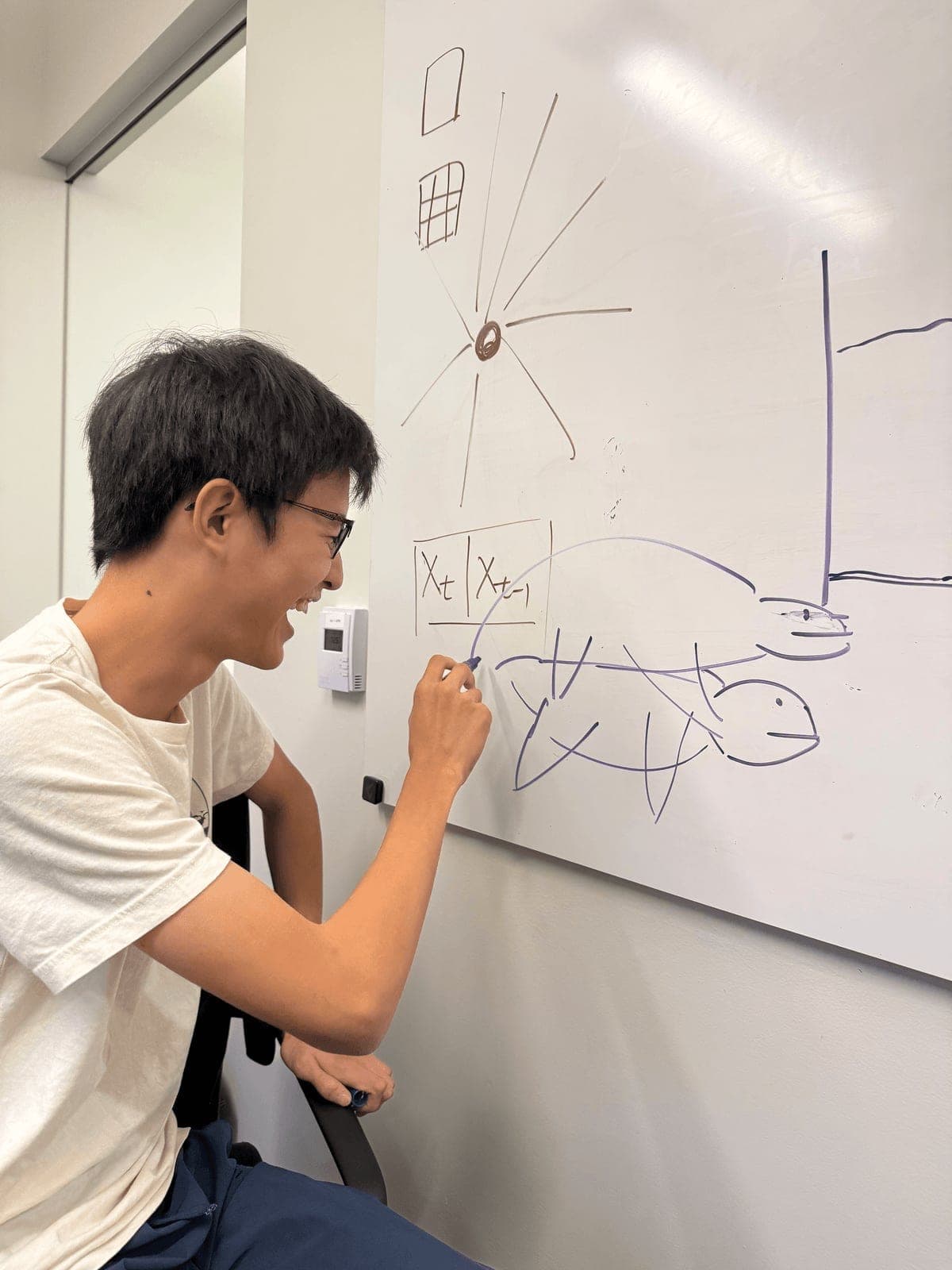 I promise this is math…
 -
A deep appreciation for what I have.
I don’t think I’ve ever felt more present. I started writing every day, and whether that was because there was simply too much to take in, or that life became so much richer through writing, I don’t fully know.
Certainly part of why is that the Stanford campus is so beautiful. I spend much of my time looking. Out the window, down the grand arcades, at the purple-pink sky at dusk. I see friends run into each other while biking past each other, and I wonder how many conversations have elapsed above that exact patch of ground, how many footsteps over the years of campus history.
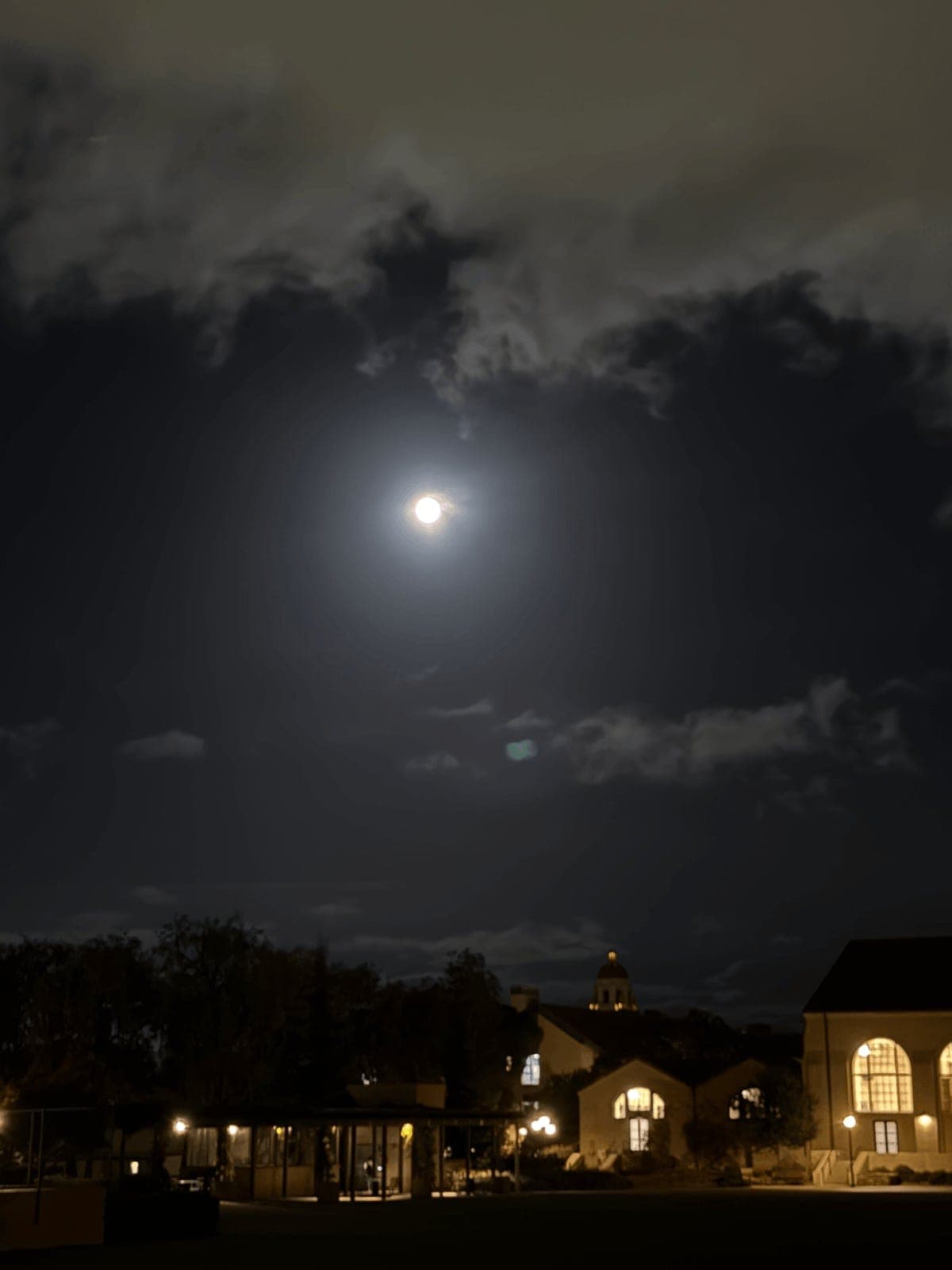
As a child, I would sàn bù (散步, go on a walk) with my family, and my mom would tell me, “The moon follows you wherever you go.” Now, I’d stare up from my bike and watch the moon stay put, gliding through the silhouettes of pine trees. I didn’t know I’d forgotten this until I was back at school, biking through the night. (As if, after all these years, the moon found me again). When did I stop looking?
And I’m so grateful that I do, because I catch the once-in-a-lifetime moments. That LEGO-building night, I don’t think I put more than 3 bricks together, but I got to laugh so hard, I got to watch my friends try to build the flowers without the instruction booklets (nerds!), their joy radiating through the night.
I am thankful for it all. The dining hall, with its buffet of good food and cut-up watermelon. The faces who fill it. The luxury of being at such a place. The people on my weekly email. The weekend lunches with my grandparents. The Friends and Family demo day, where students share their projects and everything feels possible to build. Life has really never felt richer.
-
An understanding of how founding Tilde and Hazel changed me.
Silicon Valley sharpens and distorts you at the same time. I have trained my brain to be impatient, to question and optimize everything, to bet, and to win. At Tilde, we often reminded ourselves that if the pace felt manageable, we were moving too slow, and that if we hadn’t heard “no” recently, we weren’t asking for enough.
Taken together, these lessons (which deserve their own, overdue post) form a culture that does two powerful things: it encourages you to ask what needs to exist, and it gives you the tools to make it happen. The most important habit I took from it is: always ask yourself what you want before considering the constraints. I’ve been asked many times how to land a research position or get a job at a particular company, my question back is almost always the same: “Is that what you want, above all else?” Forget the table of options in front of you. If you could snap your fingers, what would you be working on? In practice, this emphasizes what you work on >>> how hard you work, because even when there are real obstacles, you take steps aggressively in the right direction.
But I also became addicted to momentum itself, of filling your empty minutes with work and of chasing the next milestone. Even the day before school started, I wanted to drop out again to join another team and keep going. You also stop learning for the sake of learning, because there’s always something more “useful” that demands your attention. For almost the entire quarter, I complained a lot about my math classes because of how abstract they were or how unclear the returns were. It wasn’t until the last weeks leading up to finals, when I had blocked out enough time to do nothing but learn, did I start finding the math beautiful.
Lastly, I realize I feel unbothered by uncertainty these days. I think part of it came from seeing so many students wonder how they will find a place in the world and realizing that I had just left mine. I trust myself to find it again, and again throughout my life.
iv.
I suppose I always knew that the value of school was not in the courses, but if I were to talk to myself four months ago, I’d tell him that college, especially Stanford, gives you special kinds of freedom and people that are less accessible for the rest of your life. You get the complete freedom to work on whatever you want, to learn for the sake of learning, and to sit with friends, long after everyone is done eating, for the sake of sitting with friends.
You have felt the effects of serendipity before, but you can never guess how much luck is here on campus. The abundance of both like-minded and different-minded people. When someone  called Stanford a “deeply incurious, entitled, conformist place,” I could only wish they got to see the people I see. The same friend who competed in physics olympiads has one of the deepest loves for art and history I’ve ever seen. The people here, they make me want to be more curious and more daring.
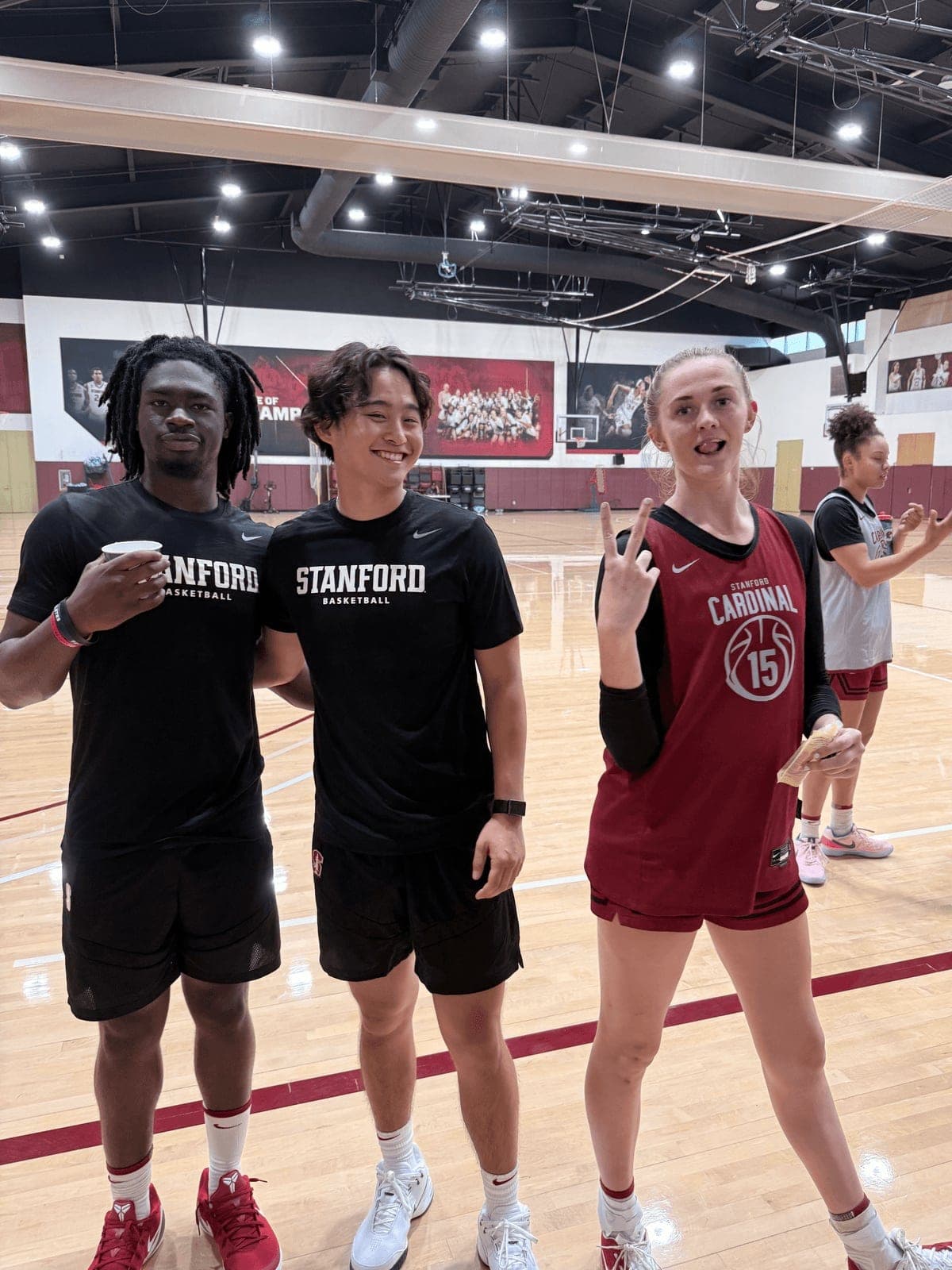
I know very little of what comes next. I want to stay here at least for the rest of the school year. I’m looking forward to my classes next quarter (building an O.S. from scratch, painting, reinforcement learning, …), to go tinker around with 3D printing and soldering at our makerspaces, to continue playing basketball with our women’s team. And I am excited for my plans to change.
v.
Several times this quarter, when I’m lost in thought, on my bike or sitting against the gym wall or looking out Green library, I zoom out and I see my whole life: the constant trying, the laughing, the naïvety to make my conviction my next life mission, the imposter’s syndrome, the calls with my childhood friends on my drives, the stressing for the midterm, the romanticizing of the good days and the inevitable bad ones too, and I look forward to it all. In this zoomed out view, I see my life as this repeated loop of trying/feeling/worrying/laughing, but, no, it’s not a reduction of my life. I look forward to each and every rerun of it. I want to climb inside and stay there, riding the same rollercoaster again and again.
On the last day of school, as I was driving onto campus, I had one more of these dizzying zoom outs. I thought about the Stanford winter formal I attended last year and I thought about how the same tuxedo shop owner who outfitted me has been there all the last four years, and how she probably sees glimpses into so many people’s lives: high school dances, college formals, weddings… And then I thought about how each person in each car I passed had their own lives, and how when I zoomed out, we are collectively just a bunch of people just doing life. I thought about the world’s remarkable capacity to carry on in every place at once and it made me feel very, very small.
Times like these I will think about why we try anything at all. Sometimes it will feel very beautiful, as I feel now, when writing it down, but perhaps more often I will feel some existentialism as to what it’s all for, as I did on the last day of school. Why did I ever care about a Thiel Fellowship, what are these titles, who cares about any of it?
Then I remember that I will get to eat dinner off-campus with Alex and Gino and then see Agniv and friends at our second LEGO night, and that thought made me happy. This quarter made me happy.
It is said that, in the moments before we die, our lives flash before our eyes. When mine rushes back, I hope it will be these moments. How lucky I am, to look forward to reliving my life.
Thank you to Tina Mai , Ellen Xu , Michael Hla , Alex Huang , Agniv Sarkar , Hannah Gao , Aidan Smith , Gino Chiaranaipanich , Vedant Khanna , Lucas Vogel , Jin Kim, and Bob Johnston for reading my draft of this.
Thanks for reading! If you enjoyed this, I'd love to add you to my mailing list for new essays: